A Conceptual Restaurant Discovery App Designed for an Academic UX Project
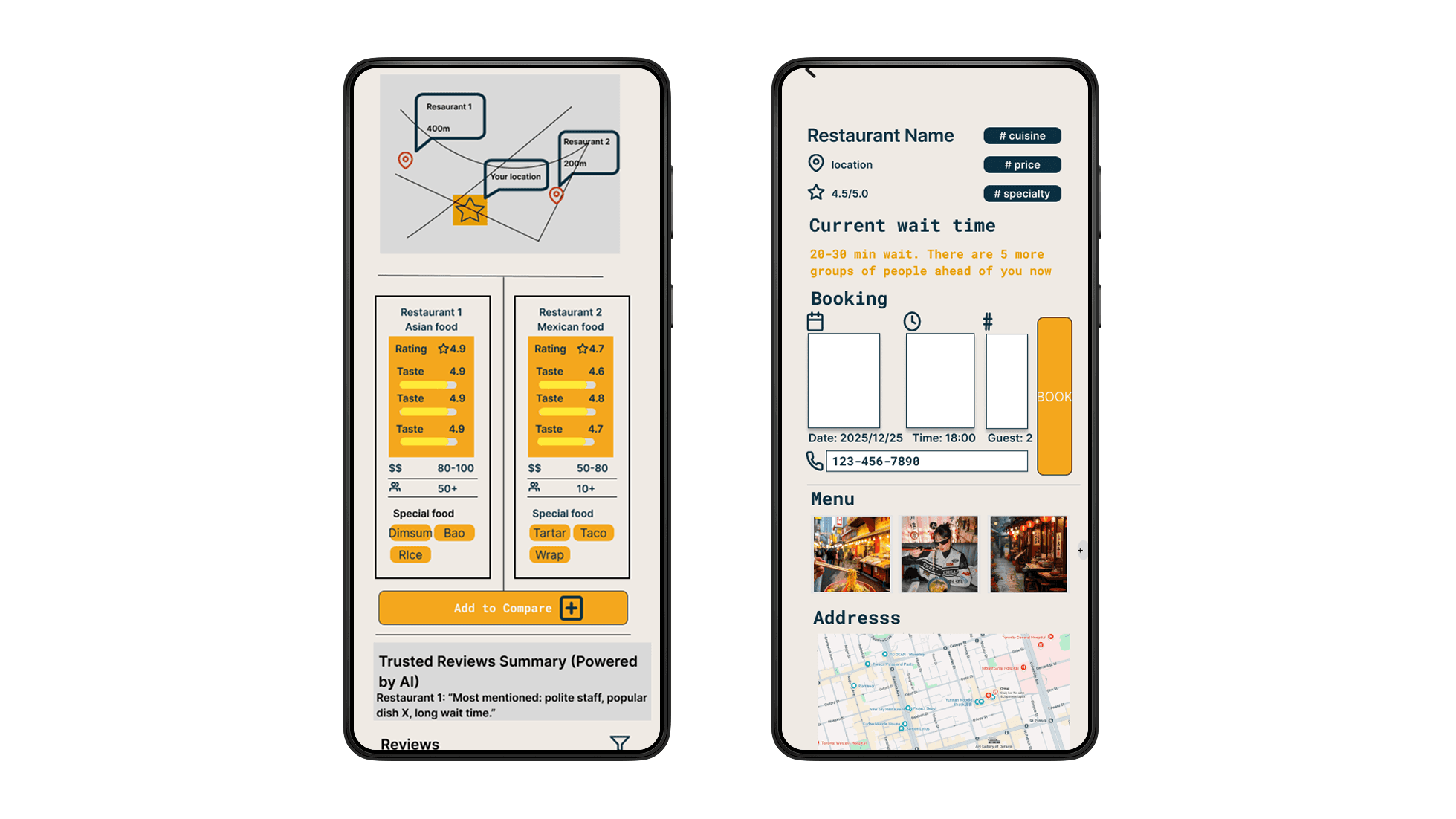
OpenGram is a restaurant booking and community app that merges the efficiency of OpenTable with the social engagement of Instagram. Users can browse real, verified reviews, book restaurants, and join community conversations — all within one seamless experience.
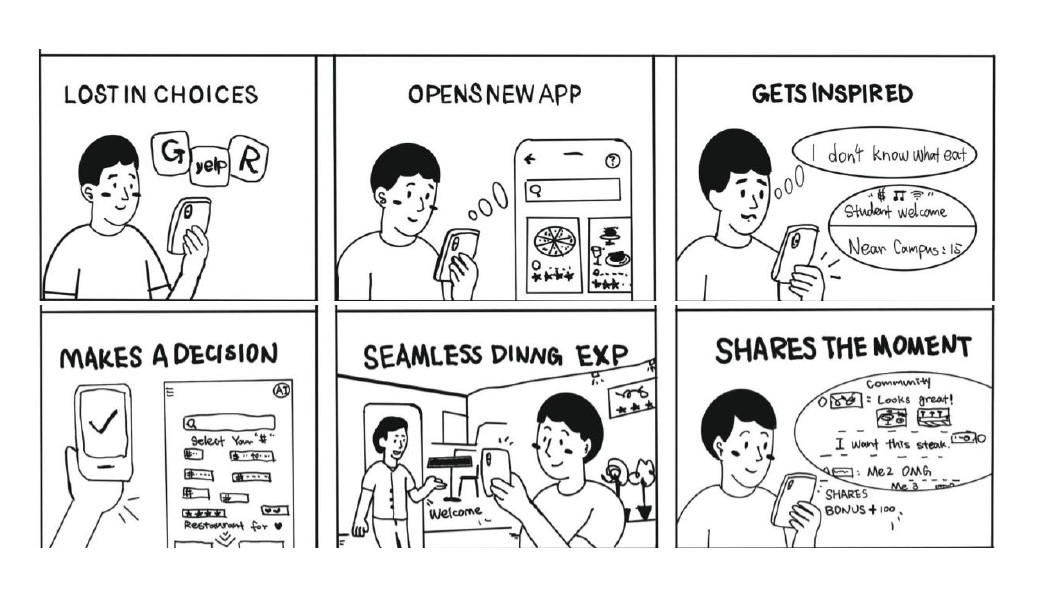
Addressing Pain Points in Search, Decision-Making, and Community Connection
Authenticity: Reviews are questionable
Problem: Users don’t trust reviews because many feel fake or outdated.
Goal: Provide only verified reviews based on real, completed visits.
Inconsistency: Restaurant booking is fragmented
Problem: Users switch between multiple apps to find, check, and book restaurants.Goal: Create a single, seamless flow from discovery → booking → reviewing.
Goal: Create a single, seamless flow from discovery → booking → reviewing.
Inclusivity: Community features exist but feel disconnected
Problem: Users struggle to find suggestions that match their culture, diet, or context.Goal: Support personalized filters that reflect real user identities and needs.
Goal: Support personalized filters that reflect real user identities and needs.
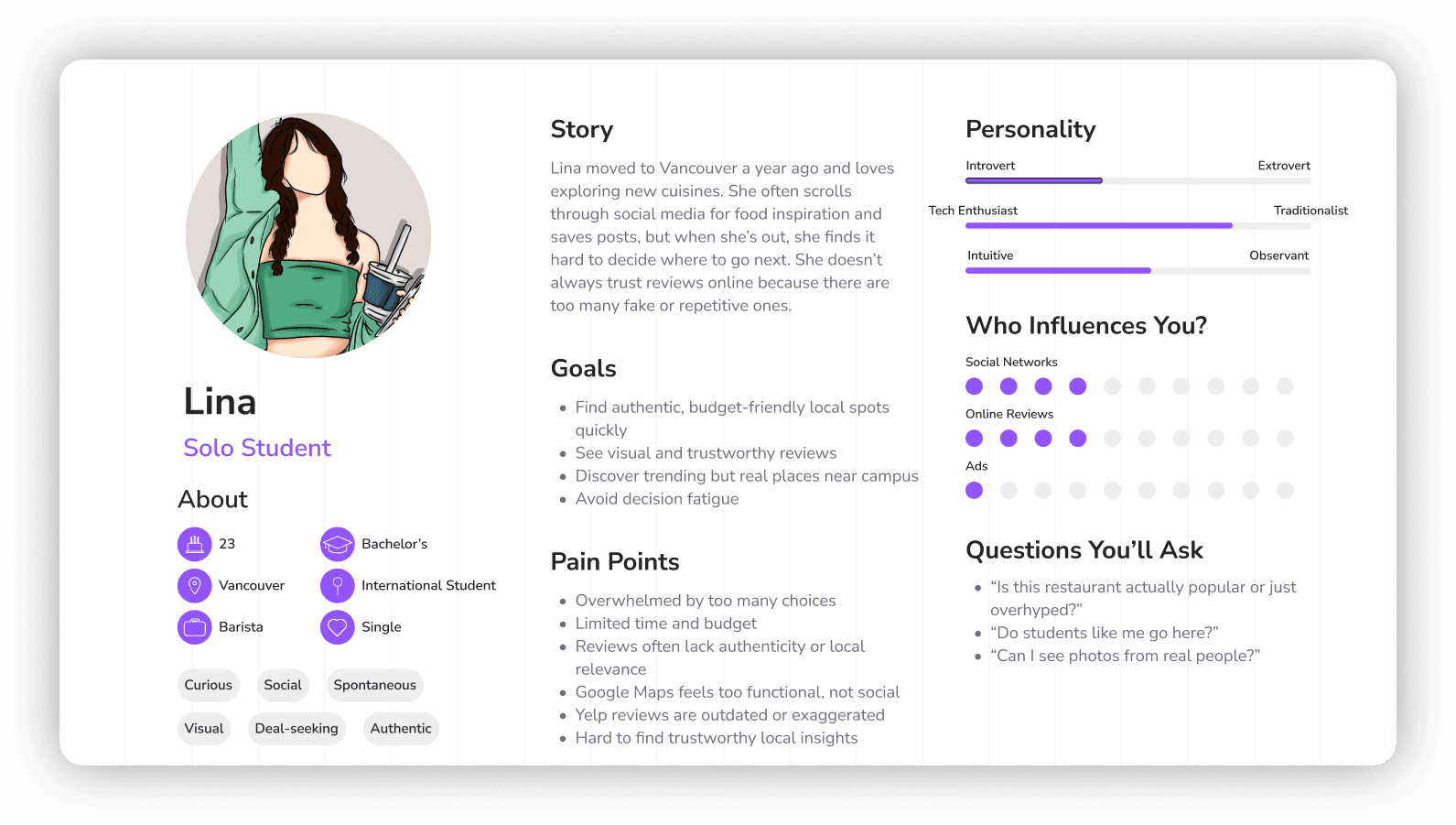
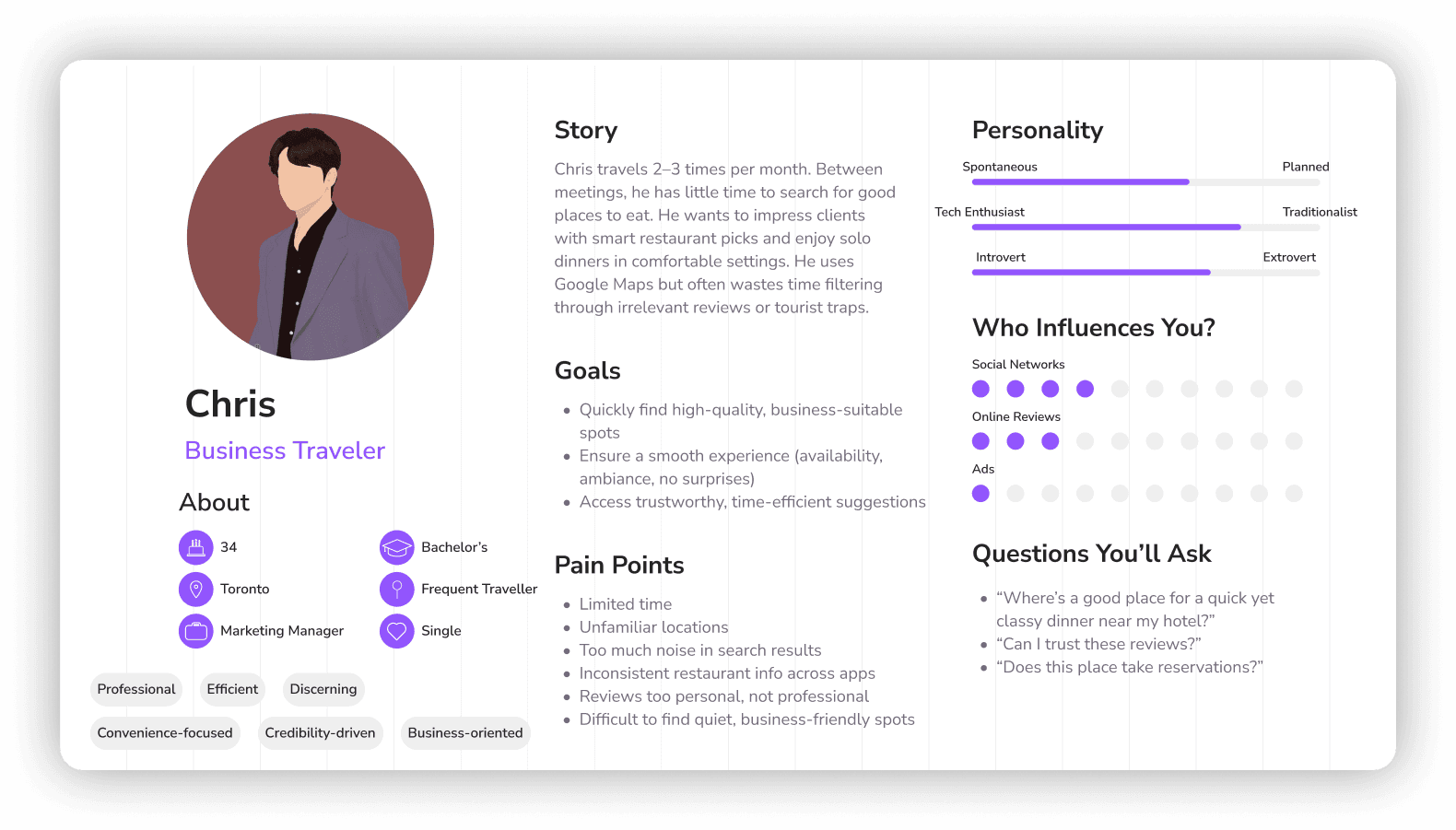
16 Primary interviews helped us uncover the emotional, cultural, and contextual factors driving restaurant choices.
Secondary research helped us understand broad industry patterns
We recruited 16 people from student groups and Friends-of-friends network, reflecting the diverse types of users who struggle with fragmented dining journeys. Insight of navigating restaurant discovery in a new city from primary research:
Understand decision-making behaviors
Identify nuanced pain points
Validate assumptions about fragmented app usage
Capture culturally rooted trust factors
Surface unmet needs for future product strategy


Learnings
What we could have done better
Simplify the review-writing process further
Clearer onboarding questionaire for community features
More testing for generational differences
Skills built
Strategic Thinking: I now approach new projects with a stronger emphasis on defining the core problem, simplifying user flows, and validating decisions with measurable metrics from the start.
Product Framing: Shifted from “designing features” to “designing solutions,” focusing on verified reviews, trust, and decision-making efficiency.