3 Months
Academic Project
Case Study

OpenGram is a restaurant booking and community app that merges the efficiency of OpenTable with the social engagement of Instagram. Users can browse real, verified reviews, book restaurants, and join community conversations: all within one seamless experience.
My role: conducted secondary and primary research, translated insights into feature concepts, built wireframes and prototypes, and iteratively refined the design through user testing and optimization.
We conducted 16 semi-structured interviews, which helped us uncover the emotional, cultural, and contextual factors driving restaurant choices; secondary research helped us understand broad industry patterns.
Interview findings highlight gaps in trust, authenticity, and platform cohesion across the dining decision flow
Fragmented discovery journey: users switch between Google Maps, Yelp, Instagram, and group chats to make one decision.
Low trust in reviews: preference for community-based, culturally familiar sources
Context-driven decisions: (choices vary by situation) casual meals, travel, special occasions, or budget vs. ambiance trade-offs.
Information overload: too many options lead to decision fatigue and slow decision-making.
Need for simplicity: strong desire for one intuitive app.
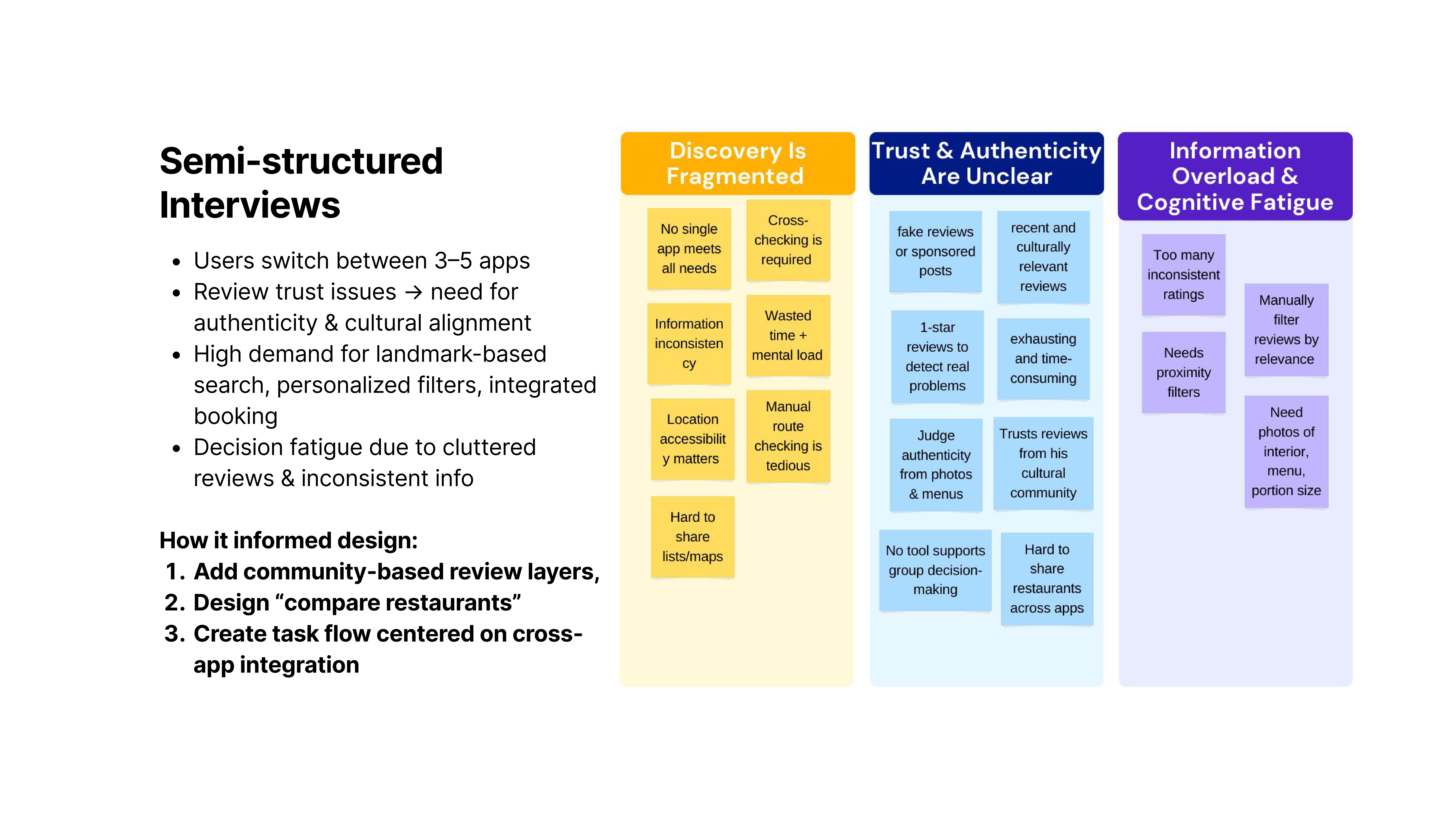
Addressing pain points in search, decision-making, and community connection:
Reviews are questionable. Users don’t trust reviews because many feel fake or outdated, while our goal is to provide only verified reviews based on real, completed visits.
Restaurant booking is fragmented. Users switch between multiple apps to find, check, and book restaurants. Our design creates a single, seamless flow from discovery to booking and reviewing.
Community features exist but feel disconnected. Users struggle to find suggestions that match their culture, diet, or context. The goal is to support personalized filters that reflect real user identities and needs.
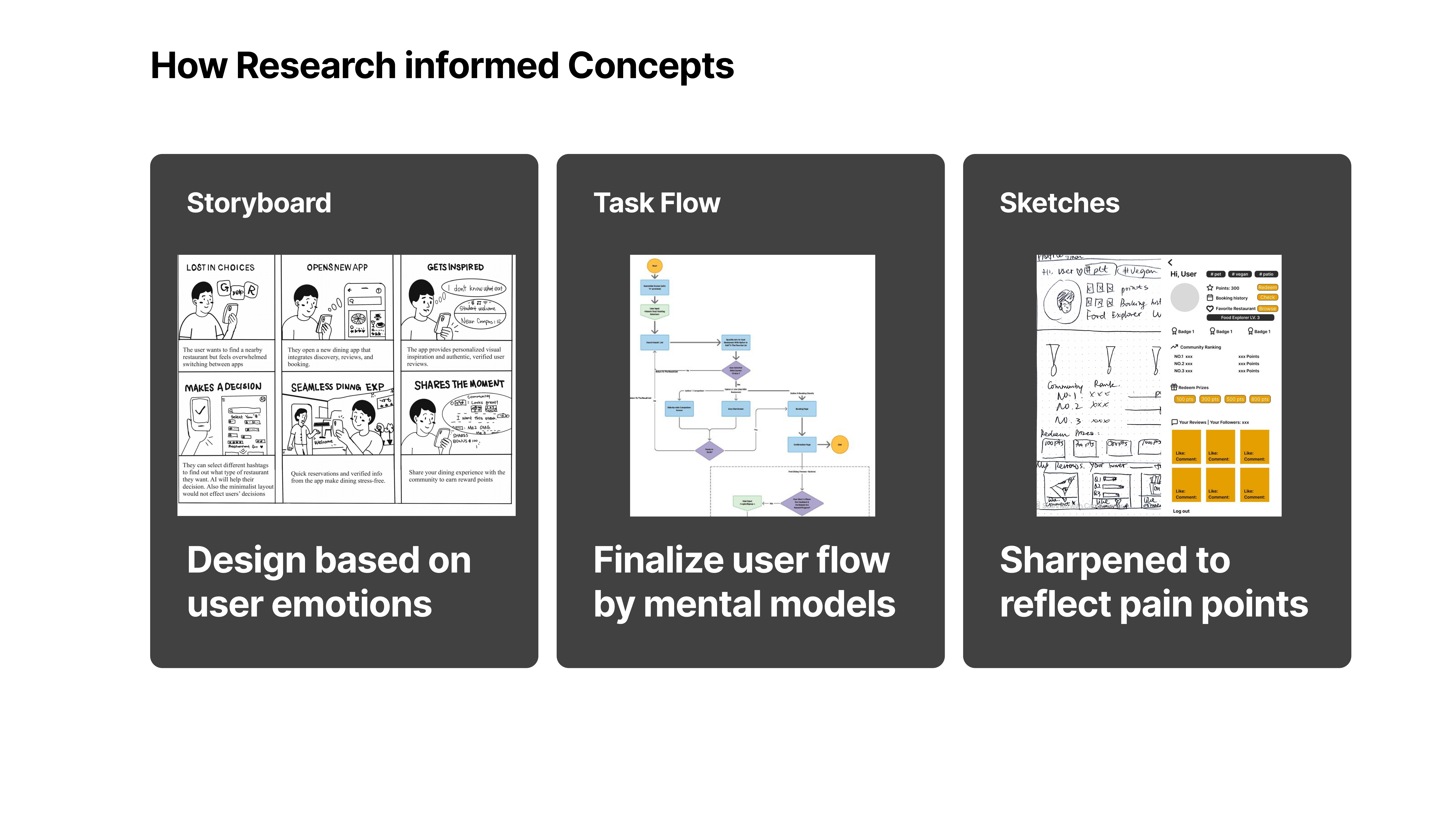
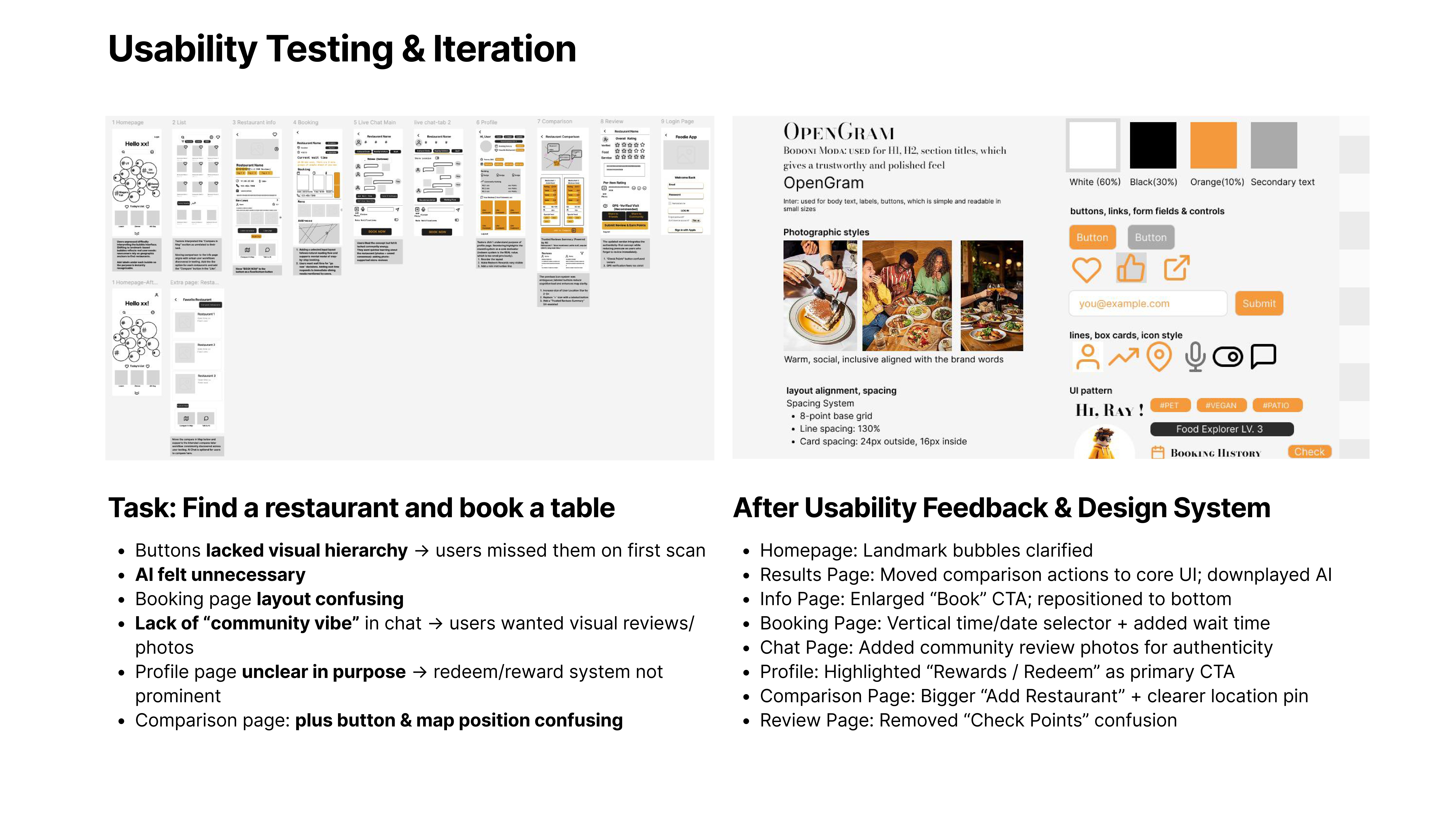
Landmark-based search for tourists (e.g., “Near CN Tower,” add labels under each bubble) which aligns with how travelers think. We redesigned the IA to guide intention-driven exploration: narrow and compare options
Avoid biased recommendations and desire neutrality
Center neutrality by minimizing visual interference
Discovery more culturally relevant and socially interactive
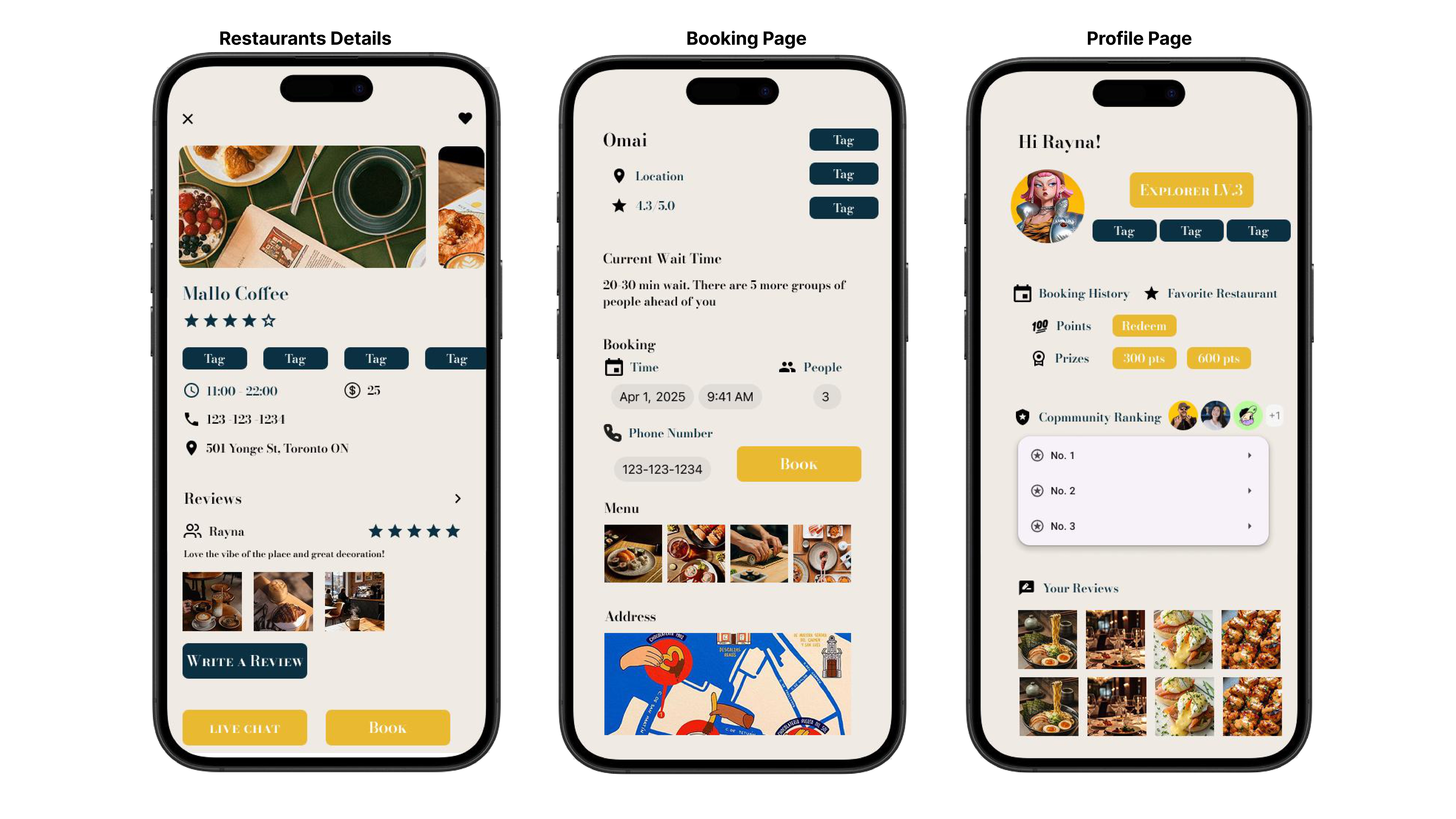
Community Chat: collective dining experiences, earn credibility & identity tags help users filter content they relate to
One-Screen Comparison: users could compare multiple places at the same time, check for current wait time & seat availability in real time
One-stop app usage
Explore restaurants & Shared Booking Link
“Best for” tags (Date night, Kid-friendly, Quick lunch)
What we could have done better
Simplify the review-writing process further
Clearer onboarding questionaire for community features
More testing for generational differences
Skills built
Strategic thinking: I now approach new projects with a stronger emphasis on defining the core problem, simplifying user flows, and validating decisions with measurable metrics from the start.
Product framing: shifted from "designing features" to "designing solutions", moving from reactive fake-review moderation to proactive incentive design, where trust is built into the system rather than enforced on top of it.